Strengthening Evidence Use Through Impact Evaluation Training and Matchmaking
As part of its commitment to advancing evidence-informed policymaking across Africa, the African Centre for Development Impact (ACDI) convened an Impact Evaluation Training and Matchmaking Workshop from 23 to 26 March 2026.
The workshop brought together a competitively selected cohort of researchers from across the continent, following the rigorous review of more than 3,000 applications. It also convened policymakers from key government institutions, including ministries responsible for Finance, Energy and Green Transition, Health, Education, Gender, Children and Social Protection, Labour, Jobs and Employment, Local Government, Chieftaincy and Religious Affairs, and Communication, Digital Technology and Innovations, with support from the National Development Planning Commission.
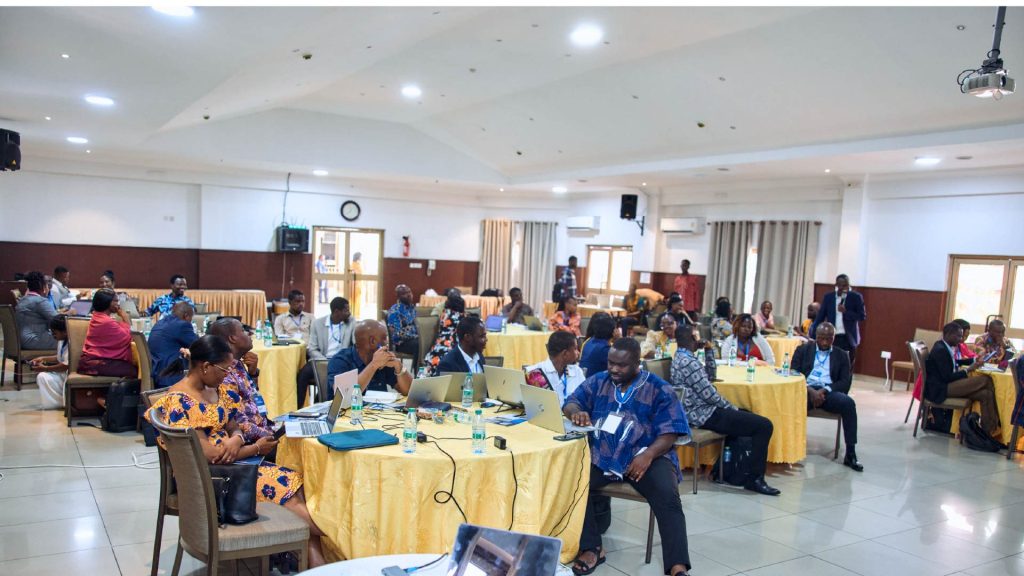
Prof. Charles Amoatey, Executive Director of ACDI, addressing participants during the training.
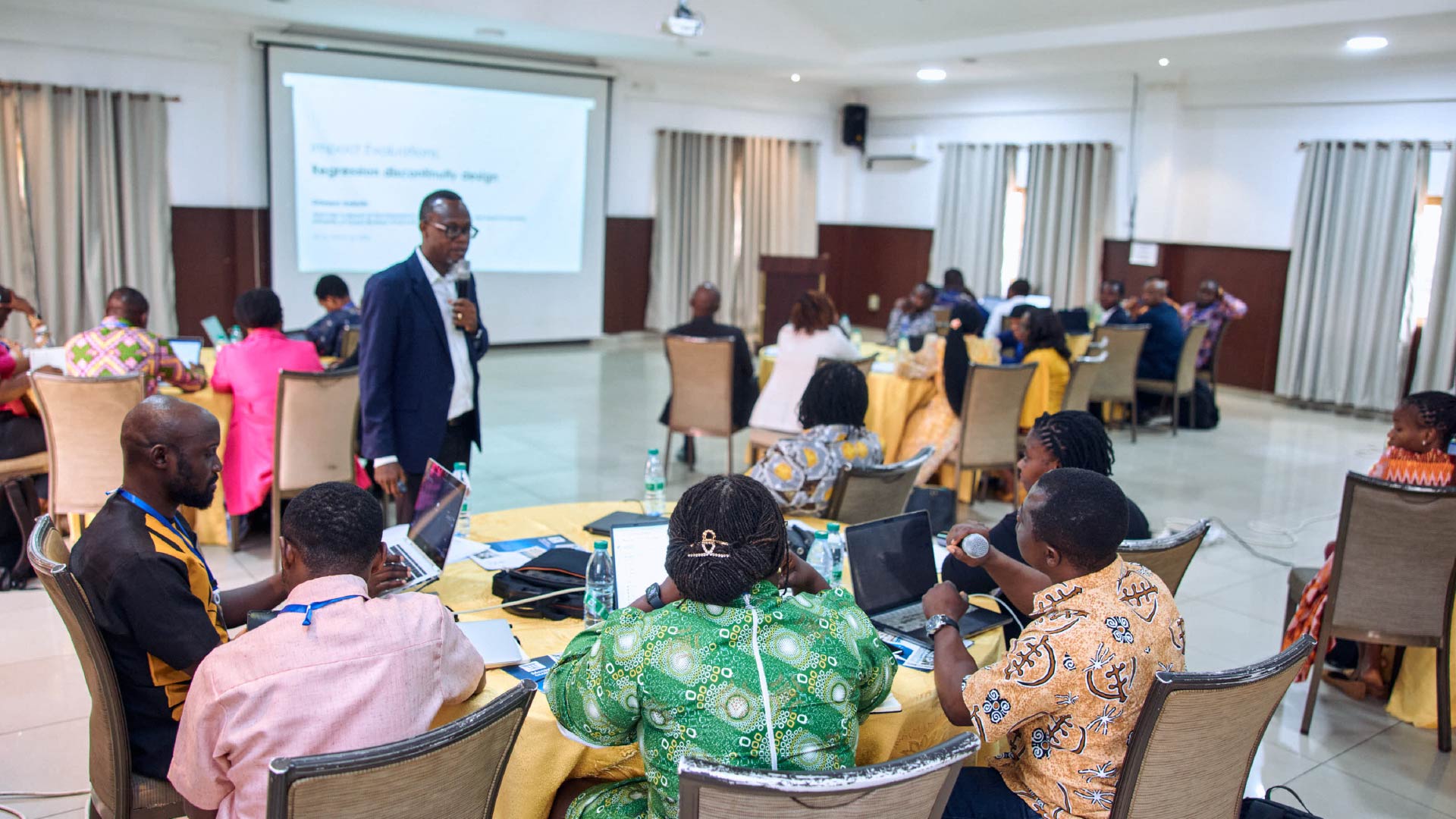
The training was designed as a dual-track programme to strengthen both the production of high-quality evidence and its use in policymaking. Researchers participated in intensive sessions on core impact evaluation methods, including randomisation and its real-world applications, Regression Discontinuity Design and cost-effectiveness analysis, enhancing their capacity to generate rigorous and policy-relevant evidence.
Technical sessions on impact evaluation methods during the training.
In parallel, policymakers engaged in practical sessions focused on integrating evidence into policy design and implementation, as well as building effective partnerships for research co-creation. These sessions strengthened their ability to commission, interpret and apply evidence in decision-making processes.
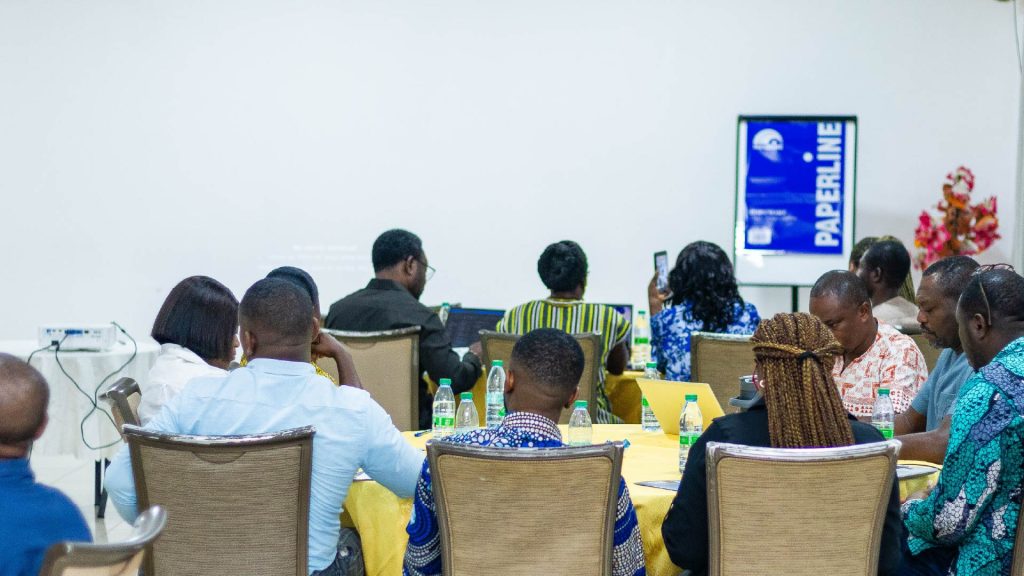
Policymakers participating in practical sessions on evidence use.
A central feature of the programme was the matchmaking component, which moved beyond dialogue to active collaboration. Drawing on priority policy challenges presented by government institutions, researchers and policymakers formed thematic teams to co-develop impact evaluation ideas aligned with real policy needs. These ideas are expected to be developed into full proposals for submission to ACDI, with selected proposals receiving funding support for implementation.
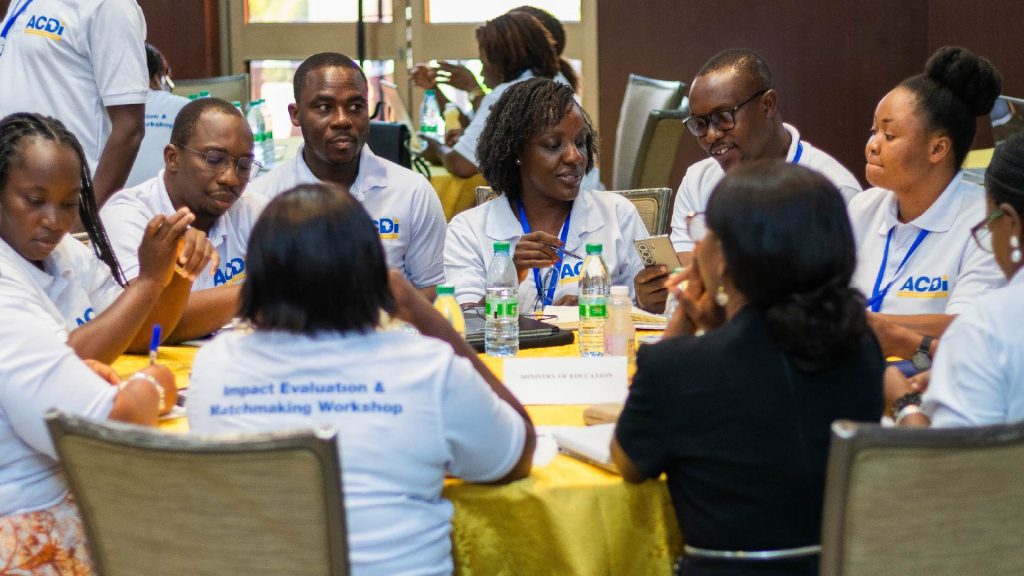
Researchers and policymakers co-creating impact evaluation ideas during the matchmaking sessions.
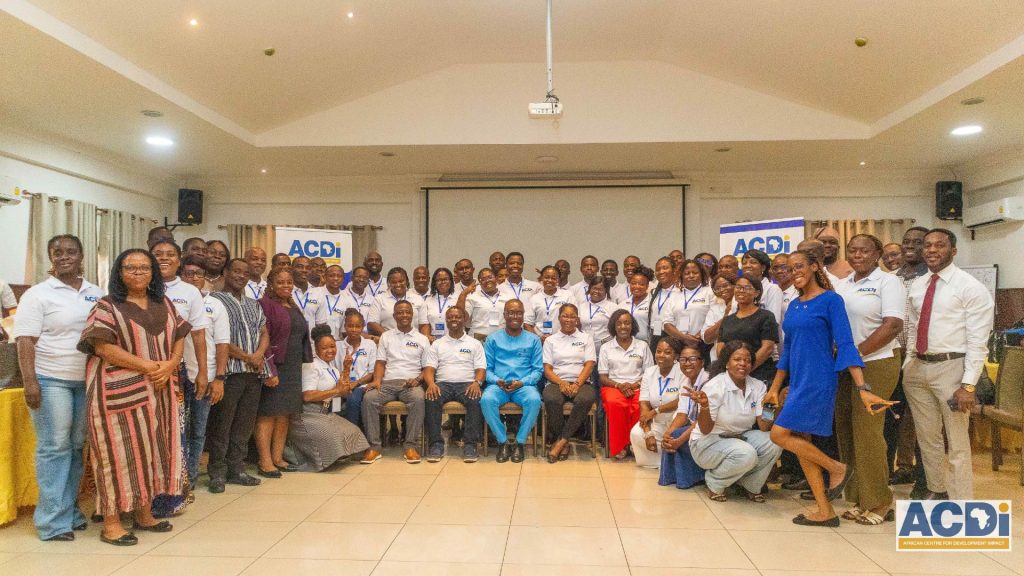
ACDI staff, facilitators and participants at the Impact Evaluation Training and Matchmaking Workshop.
This initiative is part of ACDI’s strategic approach to strengthening evidence-informed policymaking by aligning research with policy priorities and fostering sustained collaboration between researchers and government institutions across Africa.