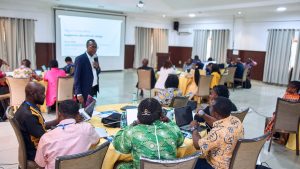
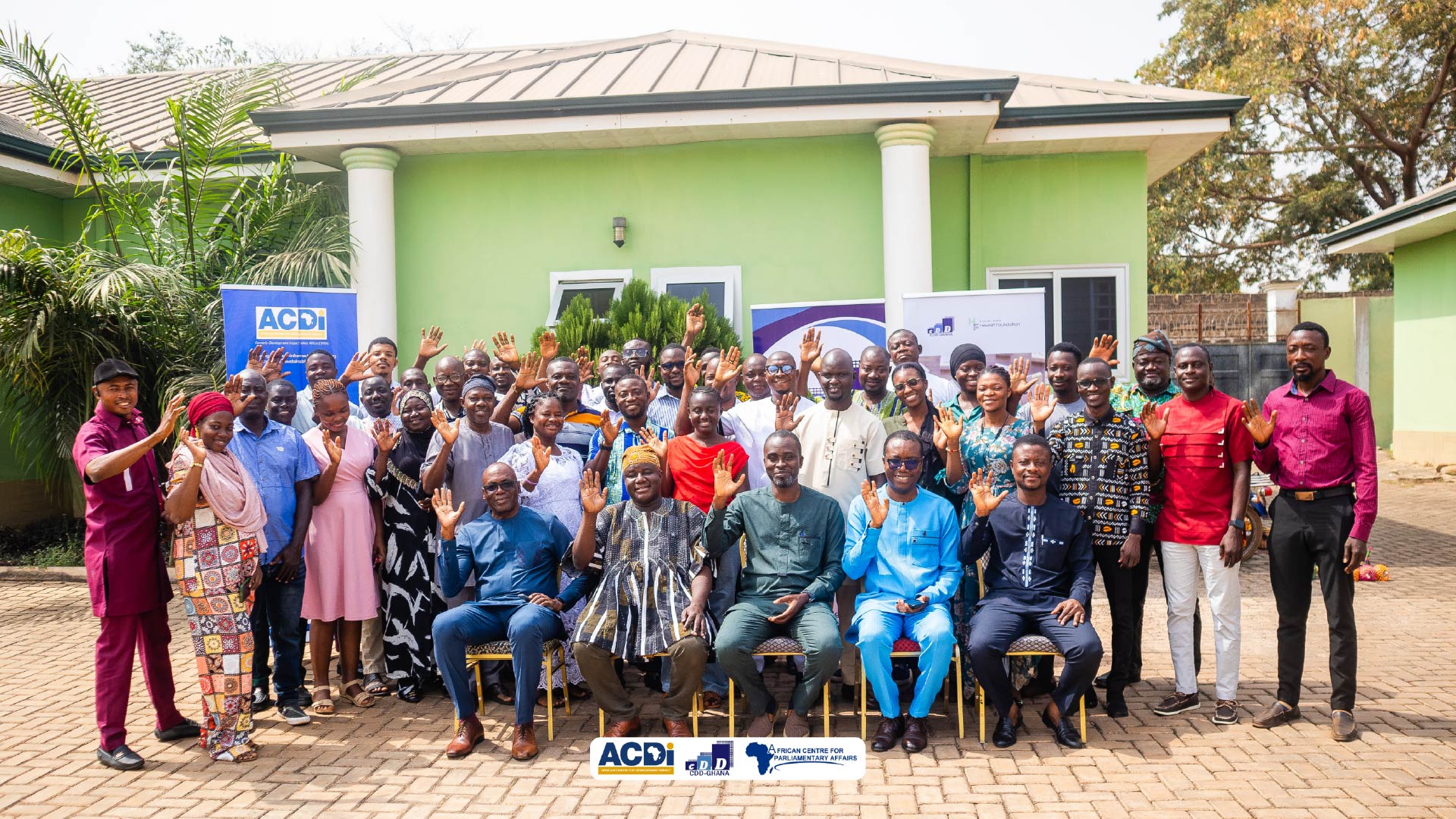
As part of its strategic commitment to strengthening evidence use in policymaking at the subnational level, the African Centre for Development Impact (ACDI) supported a three-day Policy Brief Writing Workshop under the Evidence for Development (E4D) project.
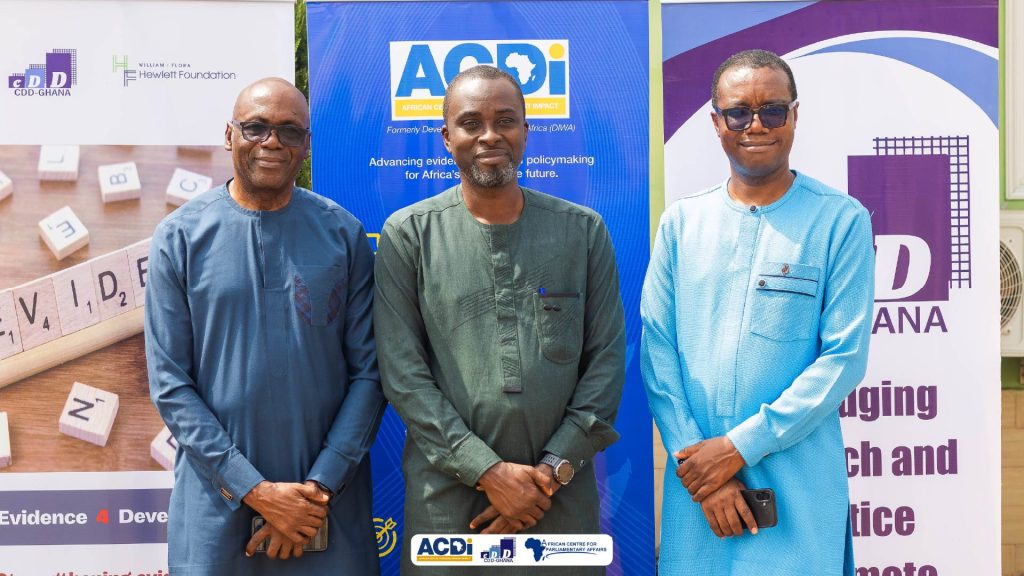
The training was led by the Ghana Center for Democratic Development (CDD-Ghana), with strategic support from the African Centre for Parliamentary Affairs (ACEPA) and ACDI. While CDD-Ghana anchored the governance and accountability focus of the programme, ACEPA contributed expertise on legislative and policy processes, and ACDI provided technical guidance on translating data and research findings into clear, actionable and policy-relevant briefs.
The workshop brought together district-level government officials and civil society actors from Dormaa East, Sagnarigu and Bolgatanga East, including planning officers, statisticians, sub-district administrators and CSO partners working within the E4D project districts. The objective was to strengthen participants’ capacity to convert administrative data, evaluation findings and citizen-generated evidence into high-quality policy briefs capable of informing district planning, advocacy and decision-making.
Held in Tamale, the workshop guided participants through the full policy brief development cycle. Over three intensive days, they moved from problem identification and audience analysis to assessing policy options, formulating recommendations and presenting structured, evidence-grounded briefs aligned with district priorities. The programme combined expert-led sessions, case study reviews, group exercises and peer presentations to reinforce both analytical rigour and practical application.
Participants also explored the responsible use of artificial intelligence tools to support policy brief writing, enhancing efficiency while maintaining standards of accuracy and credibility in evidence translation.
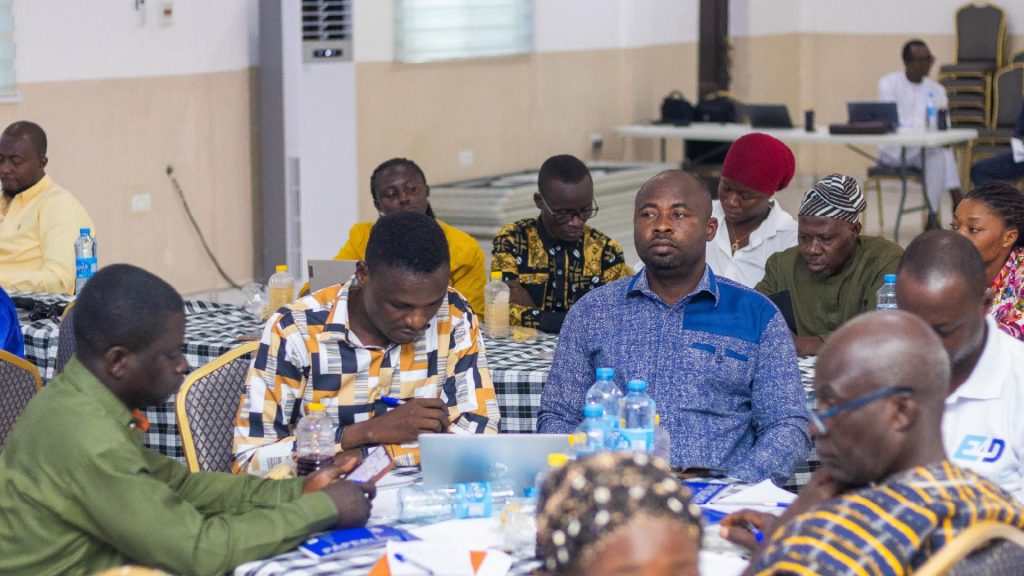
By the close of the training, participants had refined draft policy briefs linked to district planning processes and strengthened their ability to communicate local data in ways that advance accountability and informed governance. The final sessions focused on practical next steps, emphasising how these skills can be embedded within District Medium-Term Development Plans and ongoing policy engagement efforts.
We acknowledge with appreciation the support of the William and Flora Hewlett Foundation, whose funding of the E4D project made this initiative possible. ACDI remains committed to advancing similar evidence-to-action partnerships across the continent, ensuring that high-quality evidence informs decisions where policy is designed and implemented.